Take any wrapped loaf from any large American grocery store. Turn it over. Find the ingredient list, often in type small enough to require effort. Read it slowly. Most readers will find that they have, without quite intending to, agreed to eat between fifteen and thirty distinct substances, only four or five of which they would recognize from a kitchen.
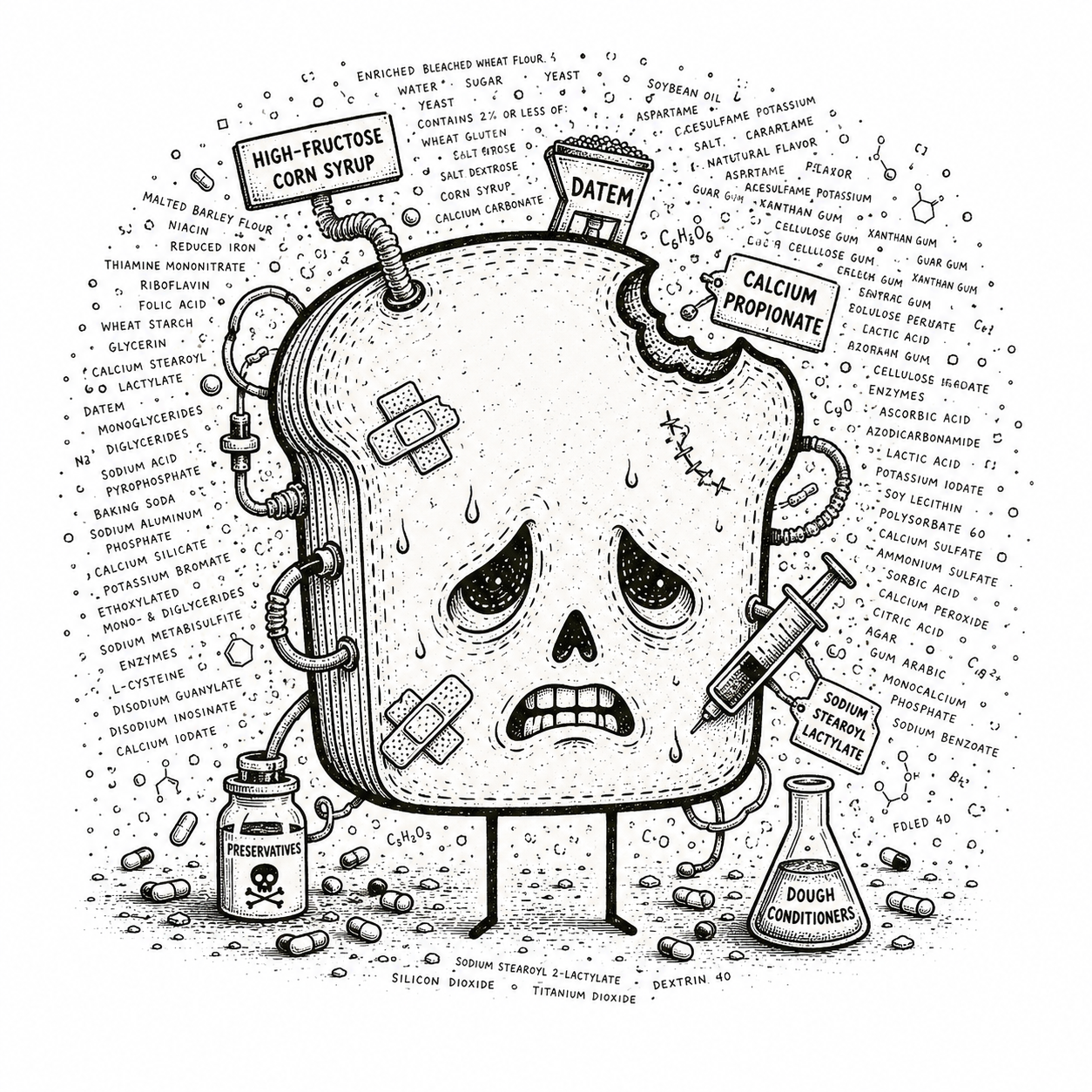
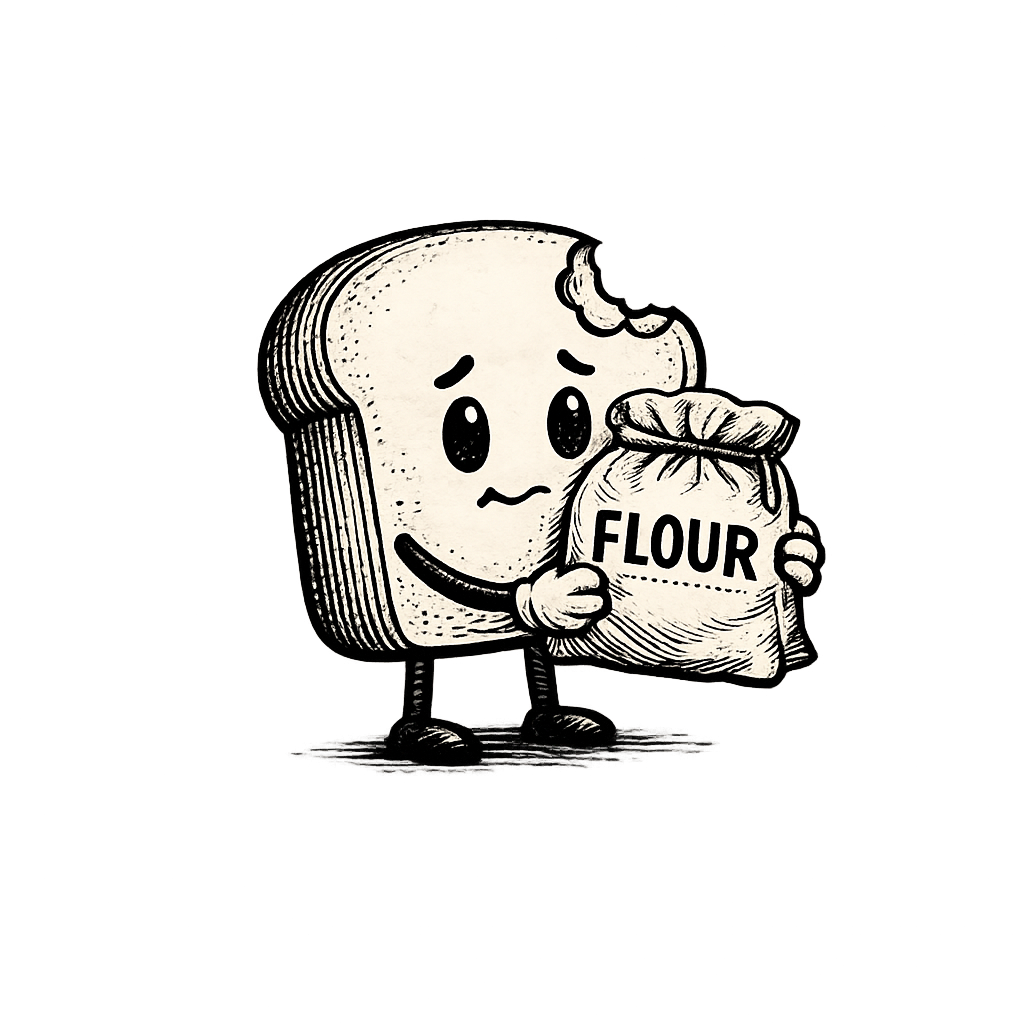
The first ingredient is enriched bleached wheat flour: stripped, bleached, and re-fortified with synthetic vitamins. The second is water. The third is sugar or high-fructose corn syrup, present to feed a fast yeast and produce the browning that long fermentation would have produced naturally. By the fifth ingredient, the loaf has announced itself: stripped flour, added sugar, fast yeast, and the silence of fermentation that never happened.
Past this point, the list ceases to resemble bread and begins to resemble chemistry. Mono- and diglycerides. Sodium stearoyl lactylate. DATEM. Calcium stearoyl lactylate. These are dough conditioners—surfactants that strengthen gluten and trap gas, doing chemically and instantly what fermentation would do biologically and slowly. Without them, an industrial loaf mixed and proofed in under four hours would collapse.
Then come the preservatives, most commonly calcium propionate. Their function is to inhibit mold, extending shelf life from days to weeks. Real bread does not need preservatives because real bread does not pretend to last.
Sometimes the loaf also contains caramel coloring, added to imitate the deep brown crust that long fermentation and a hot oven produce naturally. The crust on the industrial loaf would otherwise be pale because the bread’s fast fermentation does not develop the sugars and amino acids that brown in the oven. The coloring is cosmetic, applied to make the loaf look like bread that was made differently than it actually was.
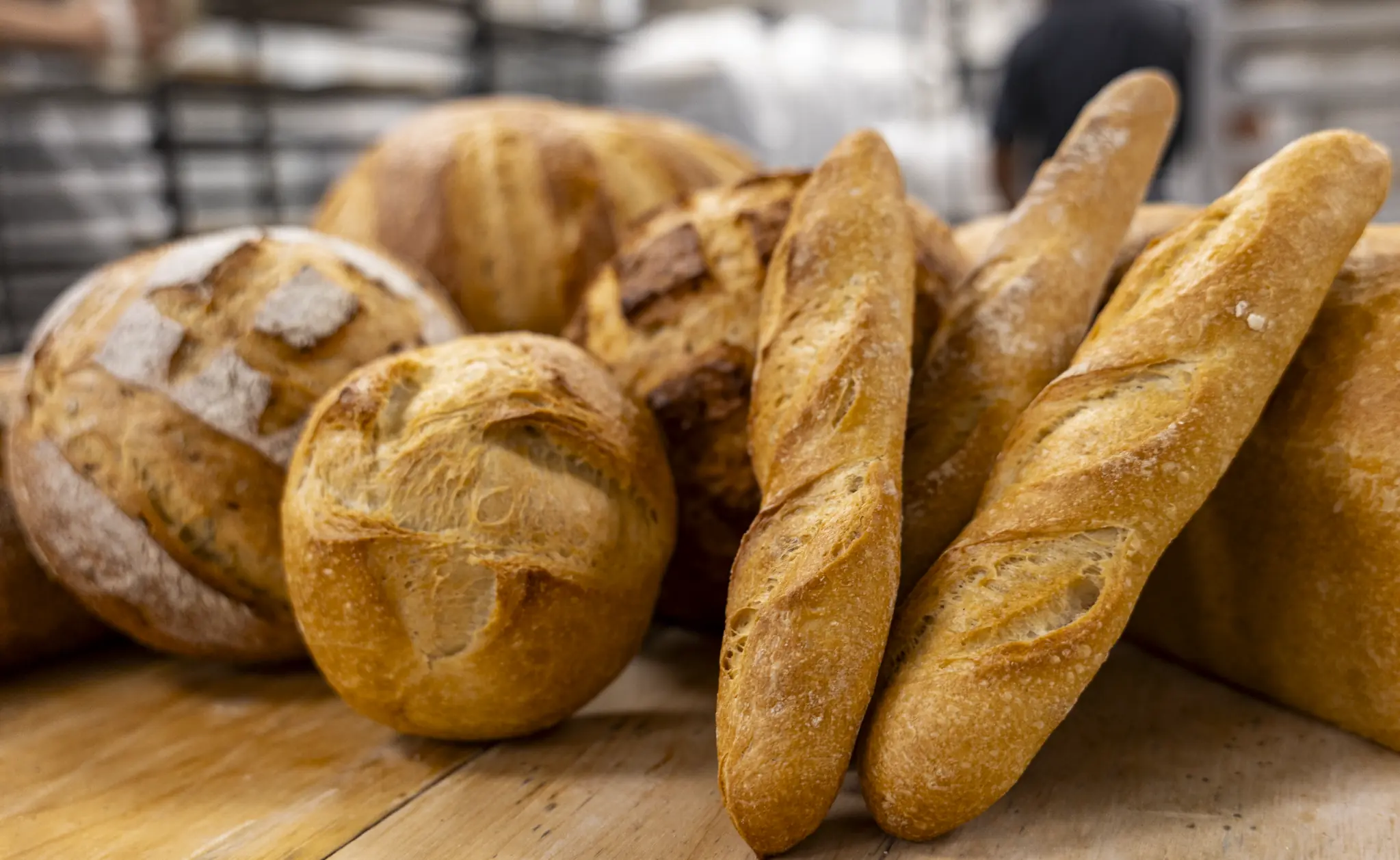
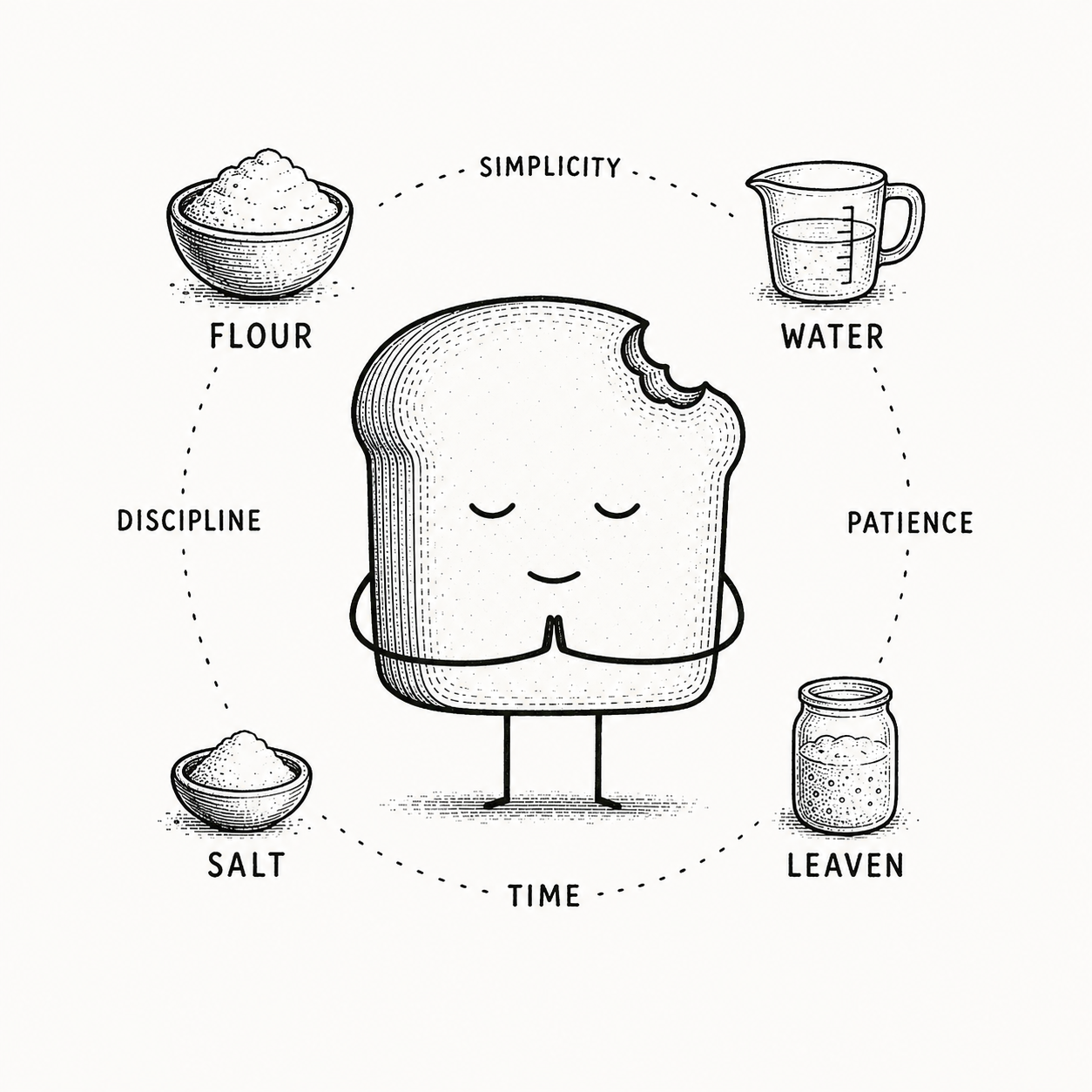
The case against the supermarket loaf is not that any individual ingredient is poisonous. It is that the cumulative ingredient list is a confession of a method that is no longer making bread in any sense the word would have been understood for almost the entire history of human civilization. The confession should be read. An honest loaf has four to six ingredients on its label: always nameable, always recognizable, always foods. The label is short because the bread has nothing to hide.
Want the full story?
This is an excerpt. The complete essay is published on Substack.
Read more on Substack