The previous essays have made the case forsimplicity. Bread has four ingredients. The supermarket loaf accumulatessubstitutes. This is true. But a reader could finish those essays believingthat any loaf containing more than four ingredients has compromised itshonesty. This is not what the standard says.
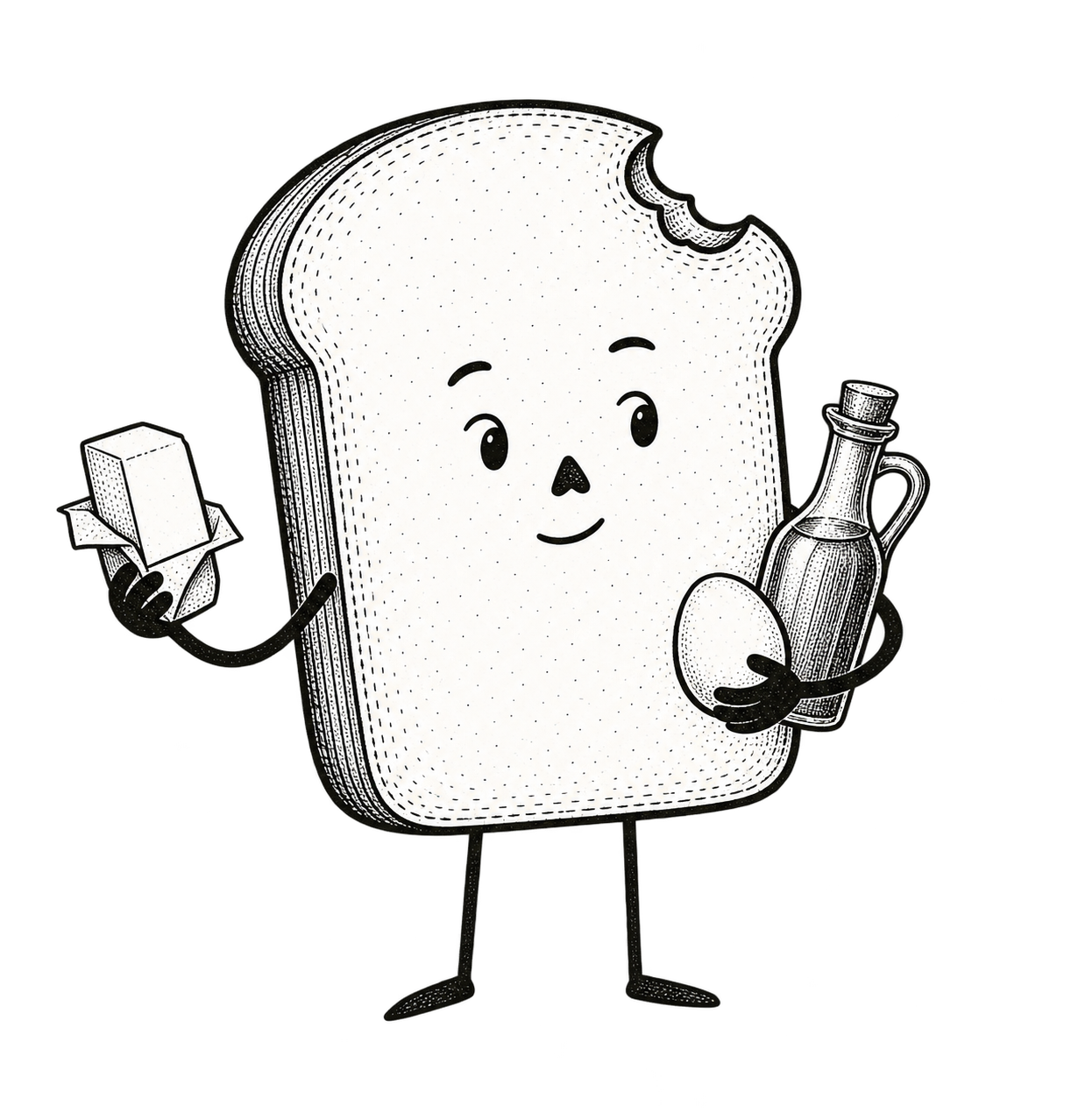
Bread has always included other things. Olive oil in the focaccia of Liguria. Butter in the brioche of Normandy. Eggs in the challah of Eastern European Jewish kitchens. Milk in the soft white loaves of Britain and the milk breads of Japan. Honey in country loaves of medieval Europe. Seeds and whole grains in regional breads of every wheat-eating culture. None is a deviation. Each is a tradition.
The honest enrichments fall intothree categories. First, fat: olive oil, butter, lard. They tenderize thecrumb, extend keeping quality, carry flavors water cannot. A focaccia withoutolive oil is not a focaccia. Second, dairy and egg: milk produces a softer,sweeter, paler crumb; eggs add protein, fat, emulsification, color. Togetherthey are the basis of brioche, challah, milk bread, panettone, kulich. Third,sweetener: a small amount of honey, malt, or sugar accelerates fermentation,contributes browning, adds background sweetness.
The contrast with the super market loaf is sharp. The thirty-ingredient industrial loaf does include some honest categories — sugar, sometimes a small amount of fat — but the great majority ofits long ingredient list consists of substances from a different category. These are not foods in any traditional sense. No grandmother would put them in bread, because no grandmother could have. They did not exist before the mid-twentieth century. Mono- and diglycerides are not honey. Sodium stearoyl lactylate is not butter.
The Mark of Honesty draws thisline. Not between simple and complex breads, but between traditionalingredients used for traditional reasons, and synthetic substitutes used tocompensate for the absence of craft. A focaccia with eight ingredients — flour,water, salt, leaven, olive oil, rosemary, sea salt, olive brine — is fullyhonest. A supermarket Italian-style loaf with eighteen ingredients, mostindustrial chemicals, is not. The line is whether the additions belong to thekitchen, or only to the laboratory. The next arc turns from substantive choicesto procedural ones. It begins with time.
Want the full story?
This is an excerpt. The complete essay is published on Substack.
Read more on Substack