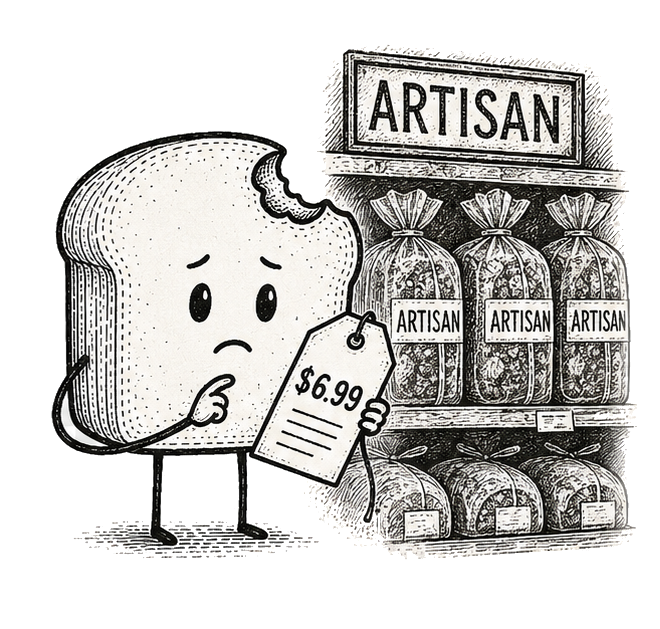
For most American eaters, flour is a singlesubstance — the white powder in a five-pound bag, treated by recipes as aconstant. The bag has a brand name, but the flour inside is understood to beflour, the same way water is water. This understanding is so widespread thatthe assumption is almost invisible. It is also wrong.
Flour is the end of a longsequence of decisions: which seeds were planted, in what soil, by which farmer;which wheat varieties were chosen; how the grain was milled, whether the germand bran were preserved or stripped, how recently the milling occurred, how farthe flour traveled. Each decision changes the flour, sometimes profoundly.
The supermarket bag is aparticular kind of flour: an industrial commodity designed for consistencyabove all other qualities, blended from wheat grown across many places andseasons, milled and bleached in ways that strip away most of what would distinguishone bag from another. The germ and bran are removed. The result is essentiallypure starch with a little protein and almost no other nutritional content, thenenriched by federal mandate with synthetic vitamins to replace what was justremoved.
Real flour is different. It istraceable to a farm, sometimes a field, always at least to a region and a mill.It is identifiable by variety: Turkey Red, Sonora, Red Fife, Yecora Rojo. It isfresh, often milled within thirty days of use. It contains the entire wheatberry, including the germ and bran. The bread it produces carries the cream oramber of wheat that still remembers being a plant. The flavor has dimension:nuttiness, sweetness, a faint grassy edge from volatile compounds that flee anindustrially milled flour within days.
The honest objection: heritagewheat is not always better wheat. The case for real flour is not that oldervarieties are categorically superior. It is that the conversation about flourcan begin again. A bag of commodity flour does not invite the eater to considerwhere the wheat was grown. A bag of stone-milled, named-variety flour from aregional mill invites all of these questions, and answers them. The first stepis to ask the next baker you meet where their flour comes from. A baker who canname the mill has begun the conversation. A baker who can name the farm hasfinished it.
Want the full story?
This is an excerpt. The complete essay is published on Substack.
Read more on Substack
-34.jpg)